
The Moneymaker Effect or How to Make Poker History

We are very excited to bring you this piece of poker history. The Moneymaker Effect is a well-known term in the poker world, so every poker enthusiast should know its background. This is why we felt it was necessary to dedicate today’s article to the man who spawned it into existence – Chris Moneymaker.
Biography
Christopher “Chris” Bryan Moneymaker was born in Atlanta, Georgia, on 21st November 1975, but mostly spent his childhood in Knoxville, Tennessee. It might come as a surprise, but Moneymaker is the surname he was born with.
His ancestors were coin-makers in Germany with the name “Nurmacher”, but they changed it when they moved to the United States to “Moneymaker” in order to sound more American. His ID has been checked by tournament officials who didn’t believe his poker-suitable name wasn’t a moniker.
Chris showed an affinity for card games ever since he was a little boy, playing blackjack and bridge. Funnily, the first time he gambled happened on a cruise ship when he was a minor. He and his mother sneaked into the ship’s casino and played the slots until security caught up on them and kicked them out.
Chris went on to graduate from the University of Tennessee with a Bachelor’s and Master’s degree in accounting.
The World Series of Poker Satellite Event
Although Moneymaker enjoyed playing casual games of poker with his friends, he wasn’t your typical poker player. He stayed away from gambling because he was experiencing financial difficulties, especially after having his first child in 2003. Despite him being a seasoned accountant, he only made $40,000 a year at his job.
He started playing online poker on PokerStars, usually taking part in their $39 per table games. One time, he decided to join a poker tournament with a $86 buy-in. Unbeknown to him that this tournament would change his life.
In this tournament, he ended up winning a ticket to a World Series of Poker satellite tournament in 2003. The ticket covered the $650 buy-in. Surprisingly, he did so well at the satellite tournament that he ended up being one of the final four players.
The first three players of the satellite tournament would win tickets to the prestigious World Series of Poker (WSOP) event in Las Vegas, Nevada. However, Moneymaker didn’t want to be among the top three players. All he wanted to do at the time was to pay his credit card bill, which he could do by winning the $8,000 prize for fourth place.
He wanted to play smart and he was afraid he might lose it all if he risked. However, his friends and family encouraged him to play his best, and he ended up winning the tournament. Still, the Las Vegas table required a $10,000 buy-in, money that Chris didn’t have. Fortunately, however, his friend and father helped him collect this sum in exchange for 20% of his winnings. Moneymaker took time off work and headed to Nevada.
World Series of Poker 2003
In May 2003, the World Series of Poker 2003 commenced. The organisers barely accommodated the players that showed up, and held their biggest event till then with 839 players.
Moneymaker started off well. He won many hands on his first day, bagging $60,000 worth of chips and placing 11th overall. However, the next day he made dozens of mistakes and he was not in the right condition to play as he was partying the previous night. Fortunately, that didn’t cost him the tournament and he placed 26th on the second day with $100,000 worth of chips.
What made him realise his potential, however, was the game against the legendary poker player Johnny Chan. Both Chan and Moneymaker had two strong pairs, but Moneymaker was ahead with his Aces. This win gave him the confidence he needed to win the tournament.
On day four, Moneymaker played against Humberto Brenes. Brenes was favoured to win because of his two aces, but Moneymaker kept raising him, until he miraculously landed three 8’s – the only combination that could keep him in the tournament.
On the last day, Moneymaker faced Sam Farha. They were the last two players and Moneymaker suggested they split the prize. Farha found the proposal insulting as Moneymaker was an amateur, so he declined. Farha was generally hostile because he couldn’t believe that someone with 20 years of poker experience was playing an online poker player at the final of WSOP.
Farha teased Moneymaker, hoping he makes a mistake or shows his bluff. Moneymaker, however, didn’t let out anything, which might have won him the tournament. Farha had the upper hand almost the whole game until Moneymaker was one card away from winning, while Farha needed two cards.
Just like Moneymaker beat Phil Ivey and Humberto Brenes with river cards, he managed to beat Farha with a full house. Moneymaker won the coveted $2.50 million, and you can be sure he paid off his credit card bill.
The Moneymaker Effect
Moneymaker became the first online poker player to win the WSOP tournament. His miraculous story inspired other online players to try out their luck at live tournaments. What’s more, the online poker industry boomed after Moneymaker’s win, which gave the rise to “The Moneymaker Effect”.
Chris continued playing on tournaments and wrote a biography detailing the historic WSOP tournament of 2003.
The Biggest Online Poker Tournament Wins in History
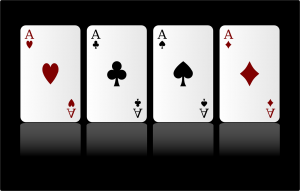
Welcome to this article discussing the biggest online poker tournament wins in history. If you ever wondered how much money can you possibly make while playing your favourite game of poker, we got you covered.
We personally love watching online poker tournaments, especially the final games that are always so tense and exciting to spectate. There are some games that are forever imprinted in our minds, mostly because of how high the stakes are and how big the payouts are.
We concentrated on online poker tournaments, because many live events have been postponed due to the pandemic, so more and more tournaments are happening online. Previously, the prize pool of online tournaments couldn’t compare to that of live events, but it appears that has changed. Anyway, enjoy reading about the success of these poker stars!
Stoyan Madanzhiev
The 2020 World Series of Poker (WSOP) was supposed to be held in Las Vegas, Nevada, but the live championship was postponed and then cancelled due to the Covid-19 pandemic. However, the organizers decided to take the tournament online and it commenced on 1st July 2020, ending on 8th September 2020.
The tournament immediately garnered a lot of attention after the prize pool was announced. The organizers pledged the staggering amount of $27,559,500. This prize pool won the WSOP a place in the Guinness World Records for largest prize pool for an online poker tournament.
The big champion, Stoyan Madanzhiev, stunned everyone at the tournament. The Bulgarian poker player had not previously attended any WSOP tournaments, so it was surprising when he managed to win the championship on his very debut. Madanzhiev got the grand prize of $3,904,686 at the $5000 No Limit Hold ‘Em Main Event, along with the coveted bracelet.
Apart from making headlines by being a newcomer who won the championship, Madanzhiev also made history by being the winner bagging the biggest amount of money from an online poker tournament.
Wengling Gao
Wengling Gao was the runner-up of the WSOP 2020 won by Madanzhiev. The Chinese player didn’t win the championship, but we can’t pity him when we remember that he made the amazing amount of $2,748,605. Sometimes, the winner doesn’t take it all!
Tyson “POTTERPOKER” Marks
The previous poker player to hold Madanzhiev’s title as the person winning the highest prize in online poker history was Tyson Marks, nicknamed POTTERPOKER. The American player won the World Championship of Online Poker (WCOOP) in 2010.
The series, sponsored by PokerStars, was created in 2002 to rival the prestigious World Poker Series. The only difference is that WCOOP was to only be played online. It is still the biggest annual online poker tournament. It takes place every year in September and it usually contains a different number of events each time.
POTTERPOKER won the main event at the WCOOP in 2010 ($5,200 No Limit Hold ‘Em Main Event), which had 2,443 entries and a prize pool of $12,215,000. Tyson won $2,278,097.50 on 26th September 2010.
Tyler Rueger
On the fourth place in our list is the American-born poker player Tyler Rueger. You wouldn’t expect someone who won the third place in an online poker tournament to be there, but Rueger proves you wrong.
We are talking about the same WSOP event of 2020, which was won by Madanzhiev. Not only did his runner-up Gao ended up bagging millions. Rueger also made a substantial amount of money. $1,928,887, to be precise.
Yevgeniy “Jovial Gent” Timoshenko
Yevgeniy Timoshenko, a Ukrainian-born American citizen, won WCOOP in 2009. The poker player with the nickname Jovial Gent was not a newcomer when he won the prestigious online poker tournament. He had previously won the Asian Poker Tour in 2008 and the season 7 World Poker Tour in April 2009.
There were 2,144 entries at the WCOOP 2010 main event ($5,200 No Limit Hold ‘Em Main Event), making up a prize pool of $10,720,000. This allowed Jovial Gent to bring home the fantastic prize of $1,715,200. He held the title of the best earning online poker player until Tyson came along the next year.
Charles “BigBlindBets” Russell
Charles Russel is another big WCOOP winner. The British poker player won the biggest online tournament in 2019, again at the $5,200 No Limit Hold ‘Em Main Event. His nickname is “BigBlindBets”, but we are not sure we believe he invested blindly when we look at his success.
The main event attracted 2,236, creating a pool of $11,180,000.00. Charles Russel brought home exactly $1,665,962.04.
Conclusion
These are the six biggest wins in online poker history. If you want to see your name up there one day, keep practicing and look for available online tournaments!
The Best UK Online Casinos – Part 2
A few months ago, I gave you my top 3 picks for the best online casinos in the UK: 888 Casino, Leo Vegas, and BetVictor and provided you with a short overview of each. And that’s exactly what I’m gonna do now as I present to you three more casinos worthy of your time and attention. Naturally, all the casinos I recommend are 100% legal for us, Brits, to play at and have both a licence from the UKGC and some third-party organisation, such as eCOGRA. Since I wouldn’t waste my time and money at unregulated sites, I wouldn’t mention them to you either.
Betway Casino
 You might have seen their awesome RNG games or heard of their Playboy tables where live dealers are dressed as the iconic symbol popularised by Hugh Hefner. Both of those treats are powered by Microgaming but while the latter is currently not available, the former can be found at Betway – one of the most prominent casinos in the Microgaming family. Apart from the large game portfolio, at this site you’ll be welcomed with a nice package that can bring new players back as much as £1000. As for the live tables, don’t spend too much time regretting the loss of the Microgaming ones because you’ll be able to enjoy the award-winning Evolution Gaming.
Ladbrokes Casino
 This operator stands for history and tradition, having their roots in a bookmaker who started offering their services at the end of the 19th century. What you should expect from them is sound offering of games, regular promotions and a substantial welcome bonus with reasonable wagering requirements. Powered by Playtech, this site is all a player might need to have a great time gaming online. A wonderful feature of this site is the loyalty programme – the more you play, the more points you accumulate and, then, it’s up to you what you’ll do with them because you’ll have plenty of chances to exchange them for cool bonuses, free spins, and other rewards.
Mr Green Casino
 Though a rather new casino, Mr Green has managed to reserve a spot at the top of UK online casinos. They are determined to do great things as you can see from the wide variety of games from different providers available on their site, the cool welcome bonus with very player-friendly wagering requirements, and their revolutionary player care programme called Green Gaming. Finally, they have a wonderful choice of live dealer games, provided by three different live casino suppliers, namely Evolution Gaming, Extreme Live Gaming and NetEnt, with the first two also being available on mobile devices. All in all, this new player on the UK iGaming scene is definitely worth your time.
So, that’s my second instalment of top UK casinos. I’ll probably be back with more of these. In the meantime, if you’re looking for more sites to play at but you wouldn’t settle for anything less than the best online casinos, have a look here. The site gives you the basics of safe iGaming and explains the nuts and bolts of vital regulatory practices. It also covers topics, such as payment methods, bonuses and promotions, and software providers.
Brief History of Roulette
 Roulette is part of what we in the casino circles like to refer to as the holy trinity of casino games, alongside blackjack and slots! What? What do you mean I’m the only one who actually calls it that? I can’t be, there’s bound to be others! I mean, it’s just so perfect! When you think of casino, you basically think of either the spinning reels of the slots, the sliding cards on the blackjack table or the rolling roulette wheel. There’s just no other option! When they hear the word “casino”, no one goes “Oh, yeah, that’s where I go to play baccarat!” It’s always one of these three games. Honestly, it’s hard to tell which of the three is the most iconic, but to me, personally, that honor needs to go to the roulette. Why? Well, because slots are too new (they’re less than a hundred years old), and blackjack is too ordinary, with it only involving an ordinary deck of cards. Roulette, on the other hand, has the visual imagery AND the thorough history to truly be the symbol of casino!
And let me tell you, there’s quite a lot to talk about when it comes to the history and origin of roulette. While most people think that it first appeared during the French revolution, unrelated versions of it have been popping around since antiquity. China, Greece and Rome all had their own versions of the basic “objects are arranged in a circle and something spins to point at one of them” game, which does make sense because, well, it’s one of the simplest games you can possibly make. Hell, somewhere, right at this very moment, a group of teenagers are playing a similar game right now, except they’re calling it “Spin the Bottle”. Regardless, the first real revolution came from “Proletariat Unrest: The Time Period”, also known as the French Revolution – a time that also gave us such classics as modern democracy, the guillotine and the inspiration for a criminally underrated “Assassin’s Creed” game. Most likely, the first roulette wheel was first invented as an attempt at creating a perpetum mobile machine, but was promptly adapted into a casino game by what must have been the most business-savvy dealer of all time.
Interestingly, at the time casinos didn’t really operate the way they do today. Instead of the casino hiring people to act as dealers and keeping the majority of the money, dealers basically employed themselves and simply used casinos as gambling spaces, in exchange for a percentage of their winnings. Many gambling activities required bulky boards (like a casino wheel), which is why having a dedicated space where you could store your stuff AND attract gamblers was a huge plus. However, as time went on, casinos gradually began turning into their modern counterparts (hired dealers and all), with a permanent selection of the most popular games being made available to play. Roulette was one of them. But it wasn’t until roulette was featured in Monaco’s casinos (which would become the cultural center of the world when it came to gambling) that it REALLY took off. After that, there was no stopping it – roulette was going to be in every casino in the world from then on.
The history of roulette is extremely interesting, and I can’t possibly do it justice in a 500 word article. I’d highly suggest that you go out of your way and read up on it a little bit, because even if roulette isn’t your favorite game, just the way it rose into prominence in the public’s eye is, I’d say, pretty fascinating!
My 3 Favourite Online Slot Games
If you have browsed the game collection of any given online casino, you have probably noticed that one genre is always dominating. One specific type of game is so popular, that operators choose to include a few hundred versions of it, while including only a few titles of casino classics, like blackjack or roulette. We are talking, of course, about slots – the favourite casino game of the majority of players, apparently. Even though I am not a huge fan of slots myself, I cannot deny their popularity, attractiveness, and amazing jackpots.
There are literally thousands of slot games out there, since almost all casino software developers choose to focus heavily on the genre. In this article, I will tell you a bit about my top three favourite slot games, and at which casinos you can find them.
Mega Moolah
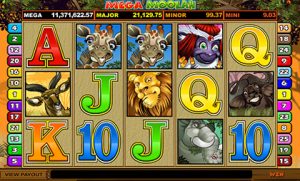 Mega Moolah has been around for quite some time, and still is one of the most popular slots. The game is developed by Microgaming, who are widely considered to be the pioneers of online casino software. This online slot has great visuals and smooth animations, and its safari theme is light and colourful. It also has one of the biggest progressive jackpots out there, so if you are lucky, this game might change your life. You can give it a try at Betway Casino.
The Amazing Spider-Man
 I’ve always been a fan of the web-slinger, and I was very happy to find out that one of the very best slot games is themed after him! It is developed by Playtech, who hold the exclusive rights to produce Marvel-themed casino games. The Spider-Man slot really captures the comic book atmosphere, and has the titular character do all kinds of stuff while you spin the reels. This slot game also has plenty of bonus features and extra rounds, some of which even include short videos with Spidey in action. This game also has a progressive jackpot, and it usually gets quite big. You can give it a try at every Playtech-powered online casino, like Ladbrokes.
Gonzo’s Quest
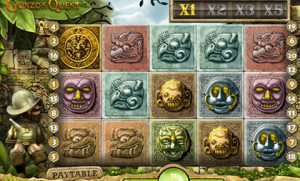
When it comes to innovative slots and eye candy, no other game can match Gonzo’s Quest by NetEnt. This developer is renowned for the quality of games they produce, and Gonzo’s Quest is a prime example of what they can do. The slot is played in a unique way, and features one of the best graphics I’ve seen in an online casino game. If you are a slots fan, you should definitely check this game out. You can find it at 888 Casino.
Conclusion
This was a brief overview of my three favourite online slots. I usually enjoy playing them with real money, but most of them are available in play-for-fun mode as well, so you can give them a try before wagering actual cash on them. Good luck!
Top UK Online Casinos
The online casino industry in the UK has been developing rapidly over the past few years. More and more players discover the charms of playing casino games with real money online, while more and more operators emerge to match the overwhelming demand. There are currently hundreds of casino websites available. Some of them are definitely worth your time, while others – not so much.
In this article, I will present to you my top picks for best online casinos in the UK. Before we get started, I need to mention that all the casinos you will see here are legal, and are under regulation by the responsible authorities. Only casinos that hold a valid licence by the United Kingdom Gambling Commission are to be trusted.
BetVictor
This online casino definitely deserves a spot among the greatest operators around here. BetVictor is a seasoned veteran in the industry, and they offer a lot to both new and regular players. They have over 500 games available on their site, and the variety is great. This is due to the fact that the operator uses software by more than a dozen of the best developers in the business! BetVictor also manages to impress with its four different live dealer casino platforms.
 This casino offers up to £200 as a welcome bonus for all newly registered players. There is also a neat cashback system in place, which allows you to recover some of the money you’ve lost to the casino. BetVictor has one of the best support platforms and customer service I’ve ever had the pleasure of dealing with, so if you experience any problems, they will provide you with a quick and effective solution.
Leo Vegas
For people who enjoy playing casino games on their mobile devices, Leo Vegas is definitely the best casino out there. Even their desktop version is nearly impeccable! They are a relative newcomer to the online casino scene, and they have quickly managed to cement their place as one of the preferred operators for UK players. There are more than 500 games available there as well, courtesy of many different developers. What makes Leo Vegas truly stand out from the others is their mobile app – it is by far the best one of them all. It has almost all games from the desktop version, as well as intuitive interface and added features.
 Leo Vegas offers one of the juiciest welcome bonuses – up to £1500, and 200 free spins for your favourite slot machines. There is also a VIP system that you can use to gain more exclusive promotions, better special offers, and other goodies.
888 Casino
Finally, we have come to my personal favourite – 888 Casino. This operator needs no introduction, as it has been one of the major players on the scene for quite a while now. Nevertheless, they have never stopped improving, and today provide the perfect mix of awesome games, cool bonuses, and outstanding customer support. At 888, you will be able to enjoy exclusive titles by some of the best developers of casino games. Also, you will be able to play outstanding live dealer games, supplied by the industry giant Evolution Gaming.
 When it comes to bonuses and promotions, 888 is second to none. In addition to the cool £100 welcome bonus and £88 Free Play, you get different promotions every day of the week! There are even bonuses for specific games and live dealer tables. If you have not played at 888 yet, give them a chance – you will not be disappointed.
There Are Plenty of Great Casinos to Play at
Those were my picks for the top online casinos for UK players. I plan on releasing more of those quick casino reviews in the future, so stay tuned. When it comes to choosing an operator, the most important thing you need to do is to make sure they are licensed, dependable, and reputable. Almost everything else is a matter of personal preference.
Make History Playing Online!
 Hello everyone, and welcome to my website! HistoryNow.com aims to be your go-to place for everything related to online casinos, gambling, and winning big! I am an avid UK gambler with many years of experience in the industry, so I can safely say that I know a lot about it. I feel like it’s my duty to share my knowledge with you guys, so that you can avoid some of the mistakes I made, as well as significantly improve your online casino experience.
I am just a normal guy who really enjoys gambling and playing at online casinos with real money. However, I consider myself a smart and cautious player – the type that knows when to stop and when to continue playing. I tend to overthink things, and that’s why I have collected much info on varying aspects of the industry. My curiosity led me to some pretty interesting finds, which I can’t wait to share with you through my articles!
On this website, I will provide you with helpful information on the best online casinos for UK players. My articles will be honest and thorough, and I will do my best to post as often as I can. Topics that I plan to cover include best bonuses, top games, strategies, and payment methods. If you want me to write about a specific topic, do not hesitate to get in touch with me.
I guess that wraps up my introduction. I am very anxious to get started with the actual content for the website. Make sure you check back often for new articles! I hope my site is both helpful and entertaining to you.
Best Regards!